Buyer guide
Towing Over Western Mountain Passes With a Ram 1500, 2500 or 3500
Altitude, long grades and heat change what a tow rating means. Compare Ram 1500, 2500 and 3500 powertrains for Western travel trailers and toy haulers.
By the West CDJR editors · Updated November 6, 2026 · 6 min read
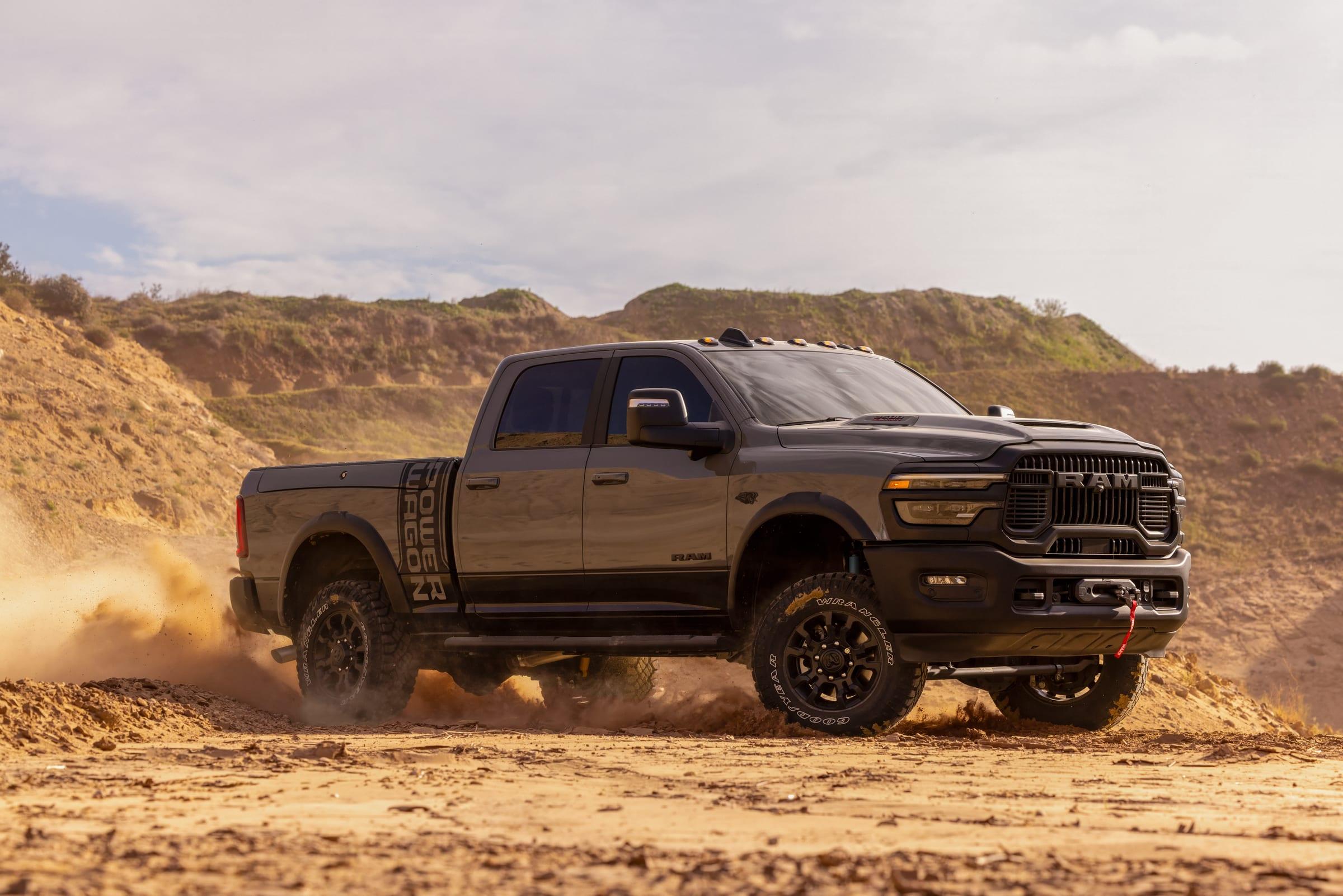
A trailer that feels fine on a flat highway can feel very different on the climb to the Eisenhower Tunnel on I-70, the long haul up to Donner Summit on I-80, Cajon Pass on I-15, Snoqualmie Pass on I-90, the Columbia Gorge on I-84 or the run from the Phoenix valley to Flagstaff on I-17. Western towing is about sustained load, thin air and hot brakes, not just the number on a spec sheet.
This guide walks through how those conditions affect your choice, then compares the Ram 1500, 2500 and 3500, with a note on the Jeep Grand Wagoneer and Dodge Durango for lighter trailers. Ratings below are the manufacturer's published figures for the 2027 model year. The 2500 and 3500 ratings are listed as preliminary, so confirm them against Ram's towing chart for the exact truck.
What altitude and grade actually do
An engine makes power by burning air and fuel. At several thousand feet the air is thinner, and a naturally aspirated engine gets less of it. A turbocharged engine can partly make up the difference by compressing the intake air, which is why turbo and diesel trucks tend to feel less winded high in the Rockies than a big gas V8 does.
Grade adds a second problem. Climbing for 20 or 30 minutes at full load heats the engine, transmission and coolant in a way a quick freeway merge never will. Then comes the descent, where the brakes and the engine's own drag hold back the combined weight of truck and trailer.
Summer in Arizona, Nevada and inland California stacks heat on top of both. A truck with comfortable headroom on paper can run out of margin when it is 105 degrees at the base of a pass. Headroom is the theme of everything that follows. Pick a truck whose rating sits well above your loaded trailer, not one that barely clears it.
Half-ton choices for travel trailers and toy haulers
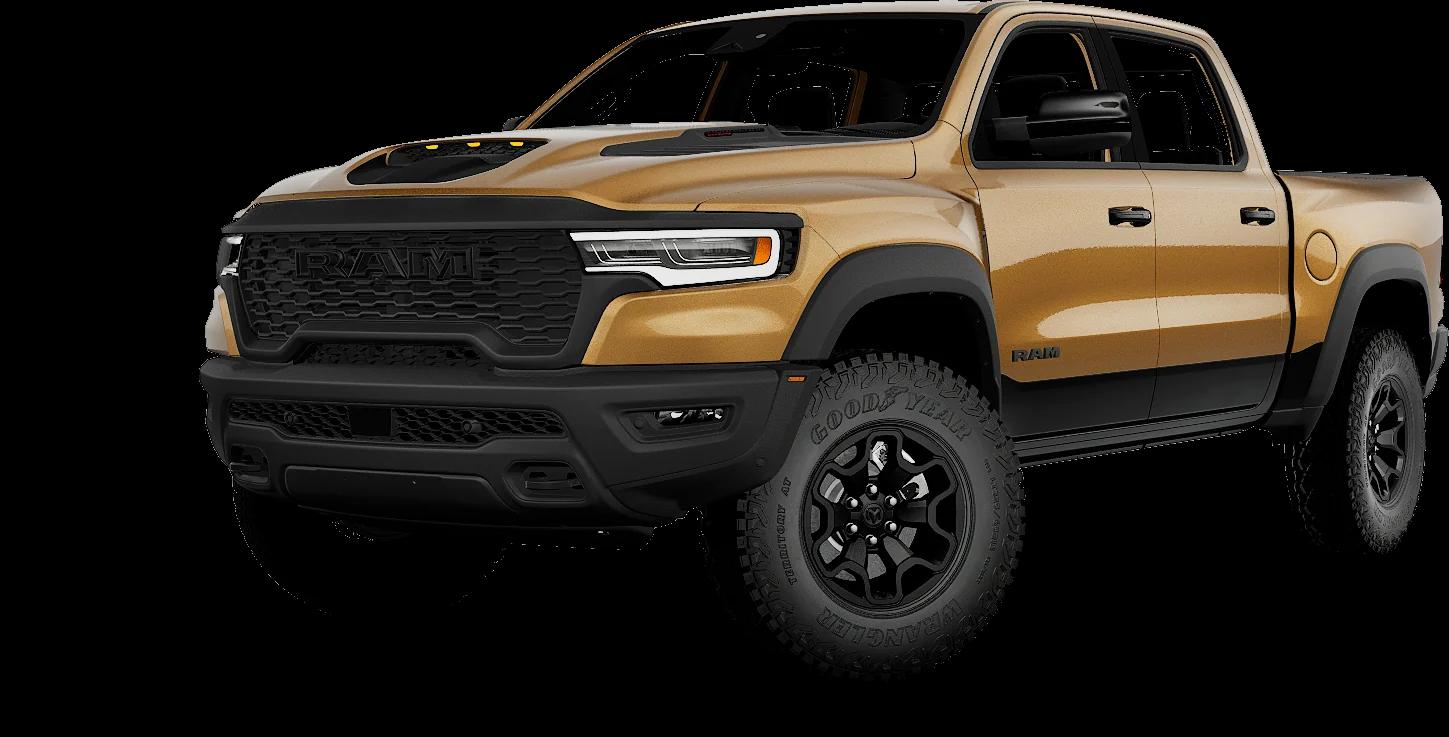
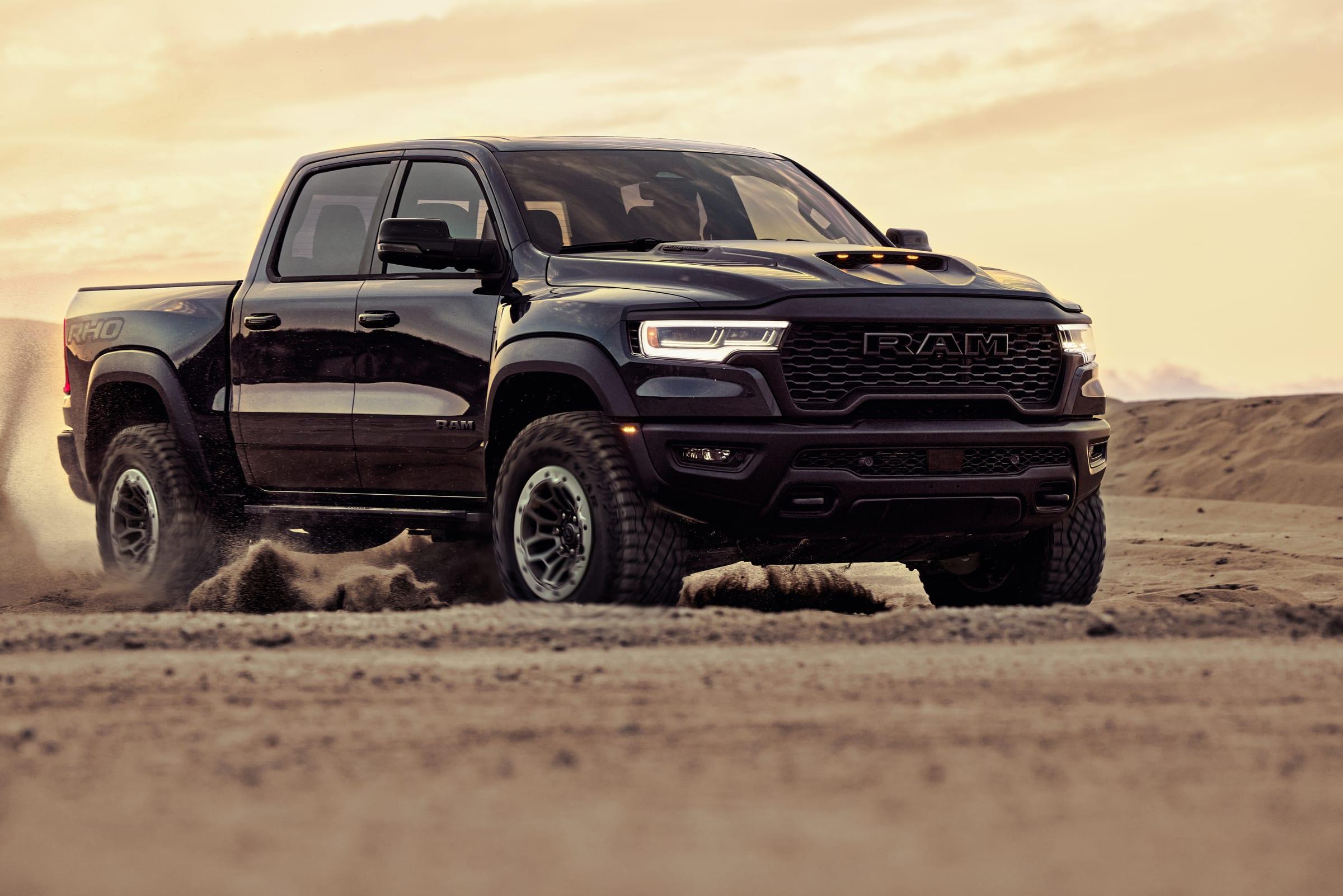
For a lighter travel trailer, a pair of UTVs or a dirt-bike trailer, the Ram 1500 is the practical starting point. Its engine choice matters more than its trim.
| Ram 1500 engine | Max tow | Max payload |
|---|---|---|
| 3.6L V6 eTorque (305 hp) | 8,100 lbs | 2,340 lbs |
| 5.7L HEMI eTorque (395 hp) | 11,370 lbs | 1,680 lbs |
| 3.0L Hurricane Standard Output (420 hp) | 11,530 lbs | 1,880 lbs |
| 3.0L Hurricane High Output (540 hp) | 9,480 lbs | 1,530 lbs |
The standard-output Hurricane twin-turbo six leads on towing at 11,530 pounds and has the second-best payload of the group. Ram recommends premium fuel for it. The 5.7-liter HEMI eTorque is close behind at 11,370 pounds and runs on mid-grade, which some owners will find easier to source on remote highways. The high-output Hurricane makes more power than the standard-output engine but is rated lower for towing, so it suits people who want speed more than people who want a trailer.
The standard-output Hurricane is standard on Laramie and Rebel, and optional on Tradesman, Express, Warlock and Big Horn. Ram lists the option at $1,695 on those trims, before destination.
Payload is the number that surprises people
Tow rating gets the headlines, but the trailer's tongue weight, passengers, firewood, coolers and a bed full of gear all come out of payload. A 5.7-liter HEMI eTorque rated at 11,370 pounds of towing carries 1,680 pounds at best. A family of four, a dog and a loaded bed can use a large share of that before the trailer is even hitched.
That is why heavier fifth-wheel and toy-hauler buyers drift toward the heavy-duty trucks. The 1500's payload runs from 1,140 to 2,340 pounds depending on engine. The 2500 and 3500 are in another league, as the next section shows.
Ram 2500 and 3500, gas and Cummins
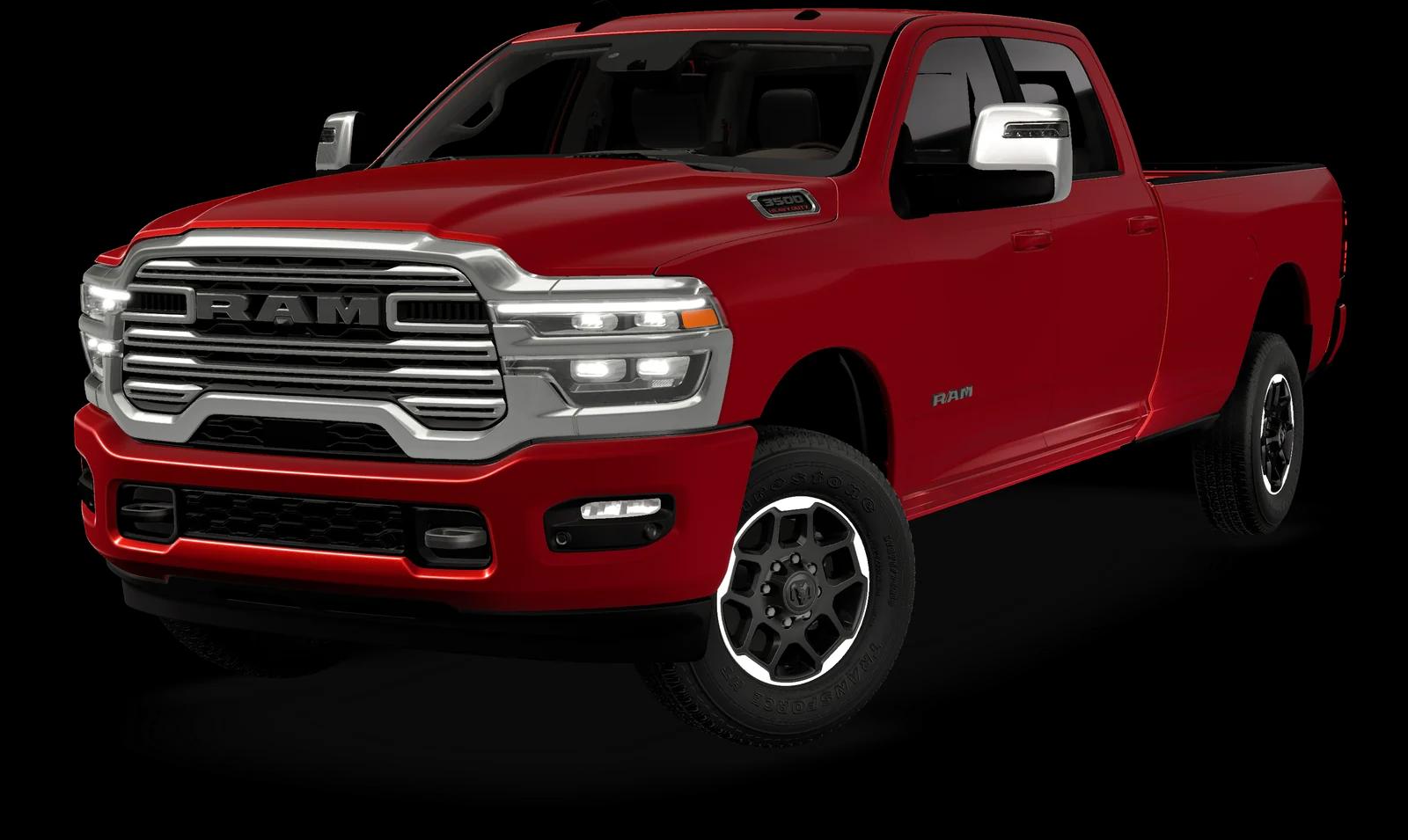
Both heavy-duty trucks use the 6.4-liter HEMI V8 as the standard engine, rated at 405 hp and 429 lb-ft. The 6.7-liter Cummins High-Output turbo diesel is the upgrade, at 430 hp and 1,075 lb-ft. Ram lists it at $12,495 before destination on the main 2027 trims of both trucks. Both pair with an eight-speed automatic.
| Truck and engine | Max tow (preliminary) | Max payload (preliminary) |
|---|---|---|
| 2500, 6.4L HEMI | 17,740 lbs | 4,580 lbs with Payload Upgrade Package |
| 2500, Cummins HO | 20,000 lbs | 3,990 lbs |
| 3500, 6.4L HEMI | 18,140 lbs | 7,580 lbs |
| 3500, Cummins HO | 37,020 lbs | 6,460 lbs |
The 2500 Payload Upgrade Package costs $835 and uses a 3500 frame, leaf springs and an anti-spin axle, raising GVWR to 11,040 pounds. For most travel trailers, a 2500 is already generous. The 3500 earns its place with big fifth-wheels and gooseneck toy haulers, and its Max Tow package uses a 12.0-inch rear axle for the heaviest ratings.
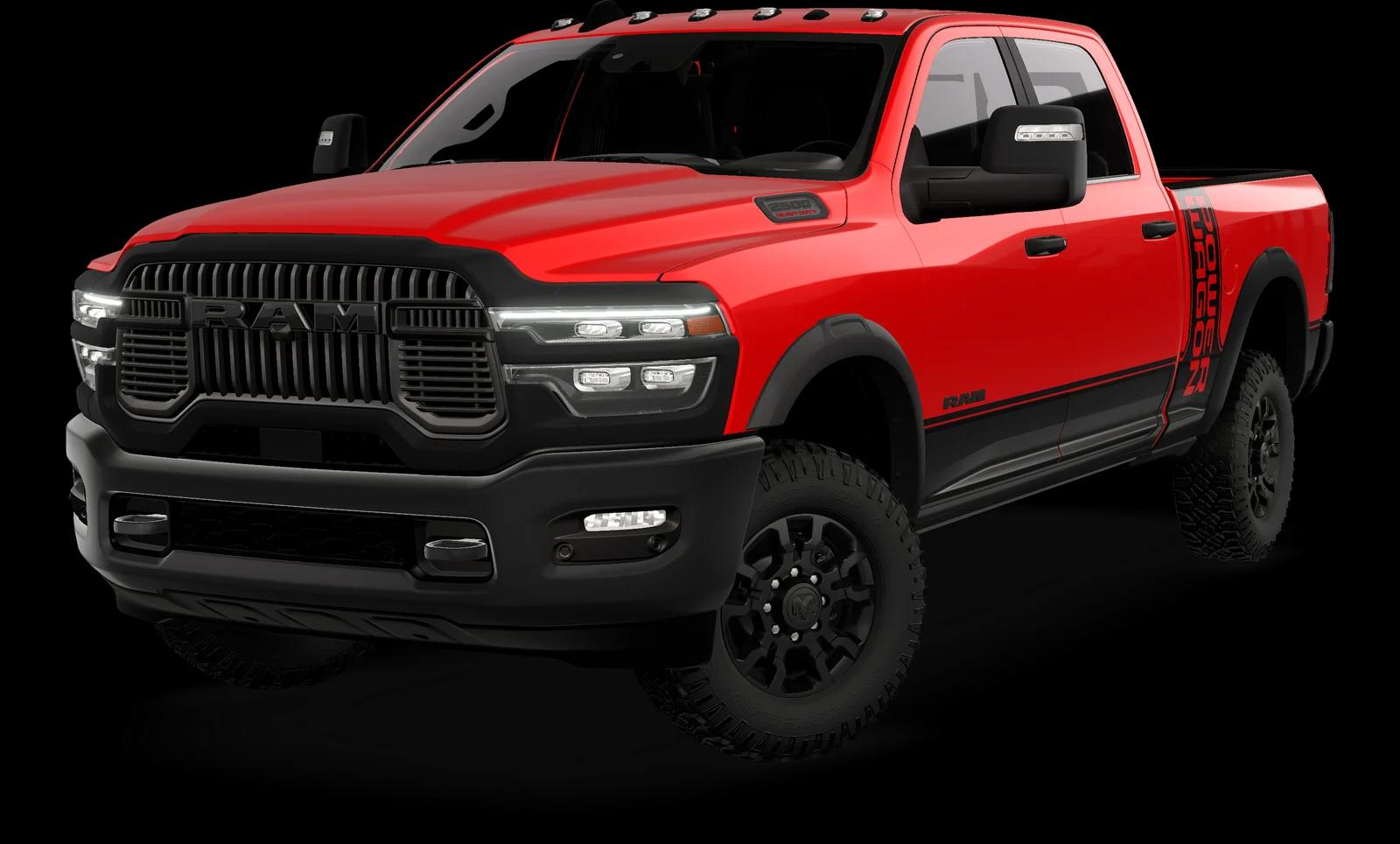
The diesel's case in the West is strength at altitude and on long grades, plus range. The 2500 Power Wagon with the Cummins carries a 31-gallon tank, which Ram says is good for about 600 miles. That matters on the empty stretches of Nevada, Utah, Montana, Wyoming and eastern California where the next fuel stop can be a long way off. The diesel also costs thousands more up front, so it makes the most sense for people who tow heavy and often.
The trailer tech worth ordering
A few options matter more on mountain roads than the badge on the fender.
On the 1500, the Towing Technology Group is $595 on most trims. It adds a 12-way and 1-way trailer connector, trailer hitch line-up assist and trailer reverse guidance. The Trailer Tow Group II is $1,095 on most trims below Limited and adds a trailer brake controller, trailer reverse steering control, trailer tire pressure monitoring and trailer light check. If you are towing anything with electric brakes, the brake controller is the item to confirm.
On the 2500 and 3500, the Towing Technology Group ranges from $1,595 to $2,395 depending on trim and adds trailer camera wiring, trailer reverse guidance and trailer tire pressure monitoring. The 3500 version also adds blind-spot monitoring that accounts for the trailer. The Tow Technology Plus Group, $895 to $1,490, brings trailer reverse steering control. A Tow-Mode Digital Rear-View Mirror package runs $835 to $1,135 and adds a wired tow-mode camera, useful when a tall toy hauler blocks the mirror.
Tire pressure monitoring matters more than it sounds. A slow leak on a trailer tire over 100-degree pavement is a common roadside failure in the desert Southwest.
Smaller trailers, Grand Wagoneer and Durango
Not everyone needs a pickup. A teardrop, a small camper or a pair of motorcycles sit comfortably within what two SUVs can pull.
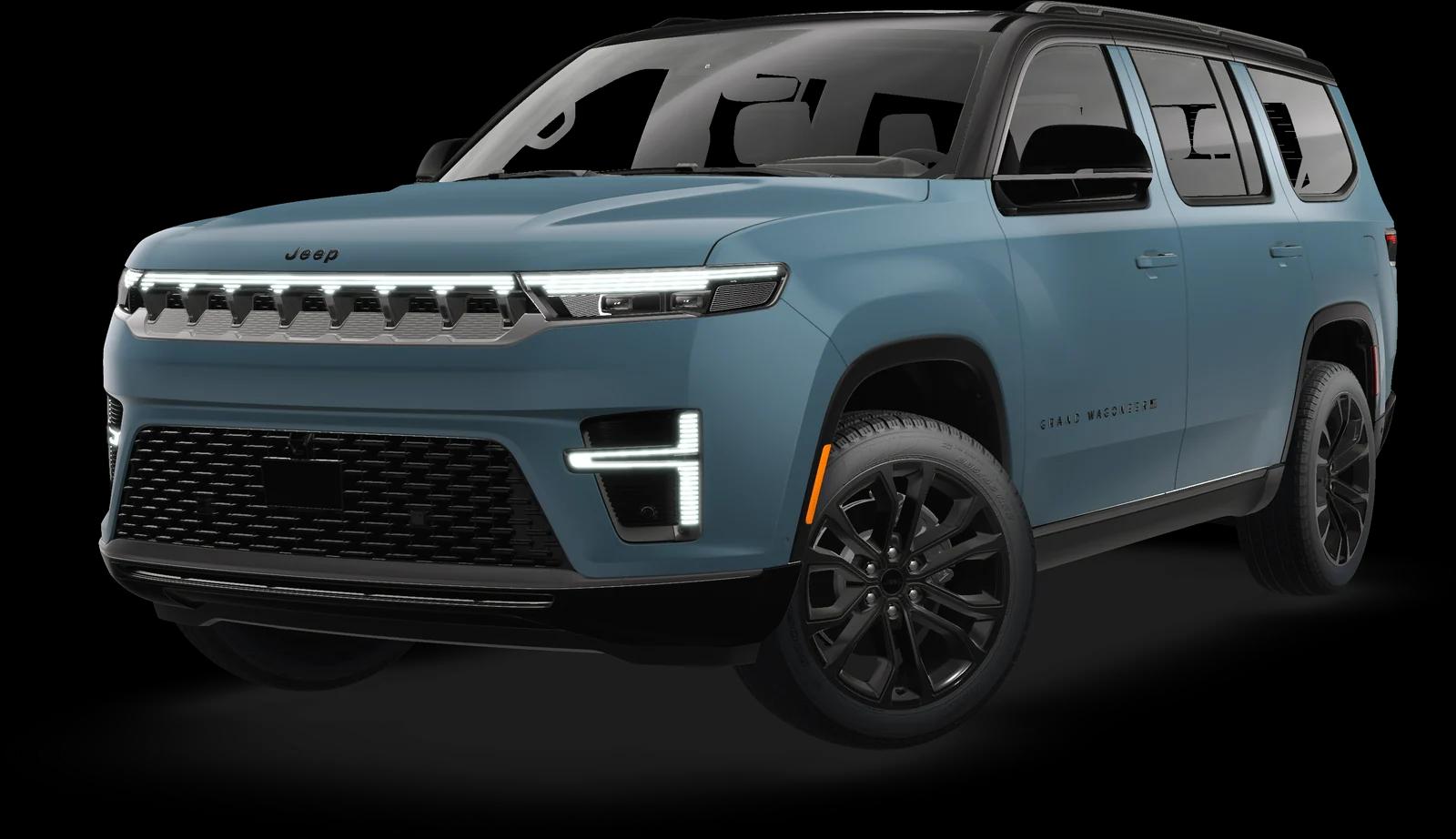
The Jeep Grand Wagoneer is rated up to 10,000 pounds, but only with 4x4 and the 3.92 axle on the standard wheelbase. With the 3.55 axle that figure falls to 6,030 pounds, and the long-wheelbase L tops out at 9,860 pounds. Jeep's Heavy-Duty Trailer-Tow Package is $1,995 on most trims ($1,195 on the base Grand Wagoneer) and includes trailer-brake control, trailer-hitch zoom and trailer light monitoring. The Upland trim includes it as standard.
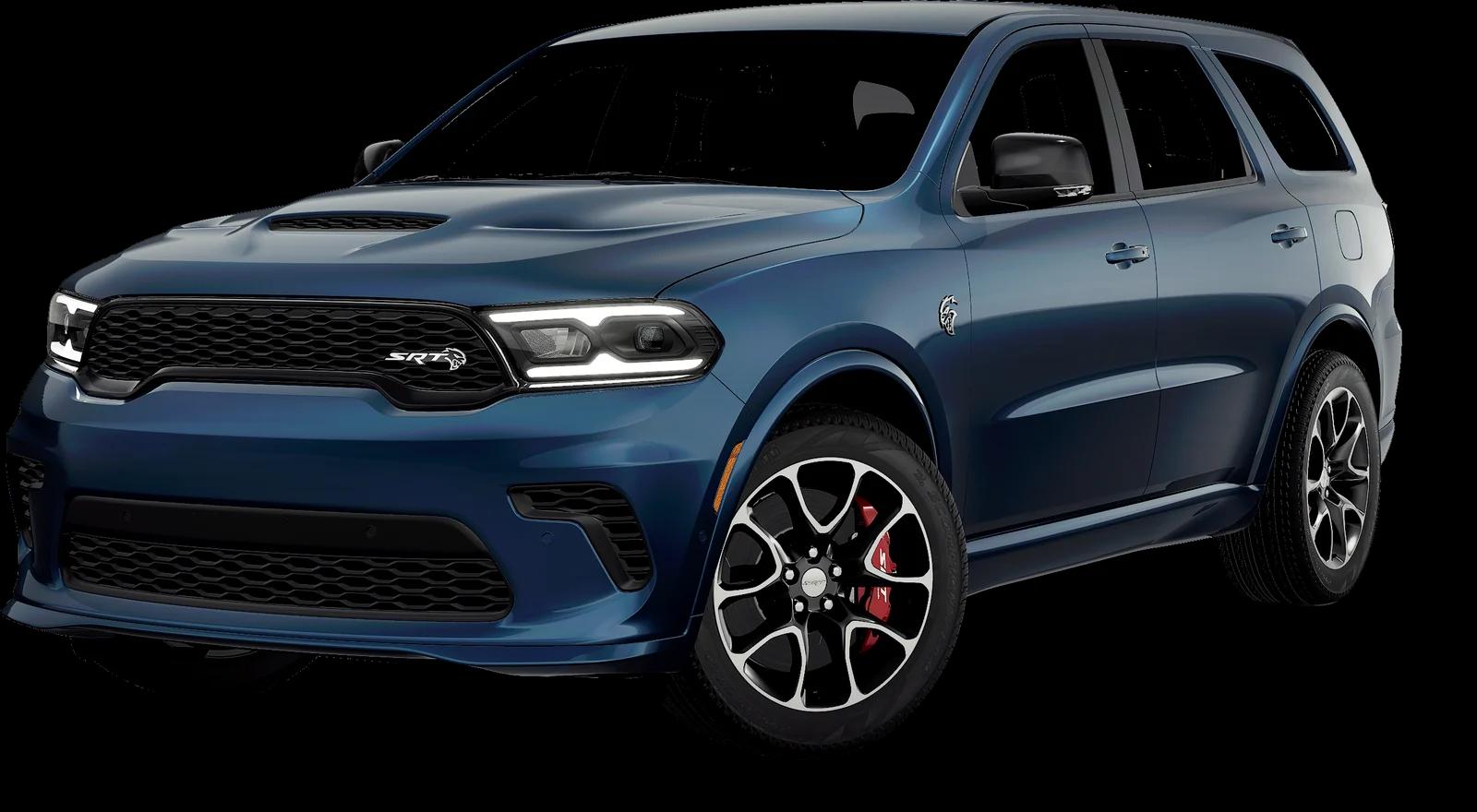
The Dodge Durango tows 7,200 pounds in GT form with the 5.7-liter HEMI. The Tow 'n Go package, $6,295 on the GT trims, raises that to 8,700 pounds and adds a trailer brake controller and blind-spot monitoring with trailer detection. The R/T 392 and SRT Hellcat carry the 8,700-pound rating as standard. The Durango's 7,100-pound GVWR and roughly 1,350 pounds of estimated payload on the GT leave less room for people and gear than a truck does.
Before you commit
Look up the exact tow chart for the cab, bed, axle and engine you intend to order, since the headline number applies to one configuration only. Add up the real weight of the loaded trailer, not the dry weight on the brochure. Leave margin for the long, steep grades you actually plan to drive. Prices here are manufacturer starting figures before destination and change often, so confirm current pricing and availability before you buy.